
 Image 1 of 1
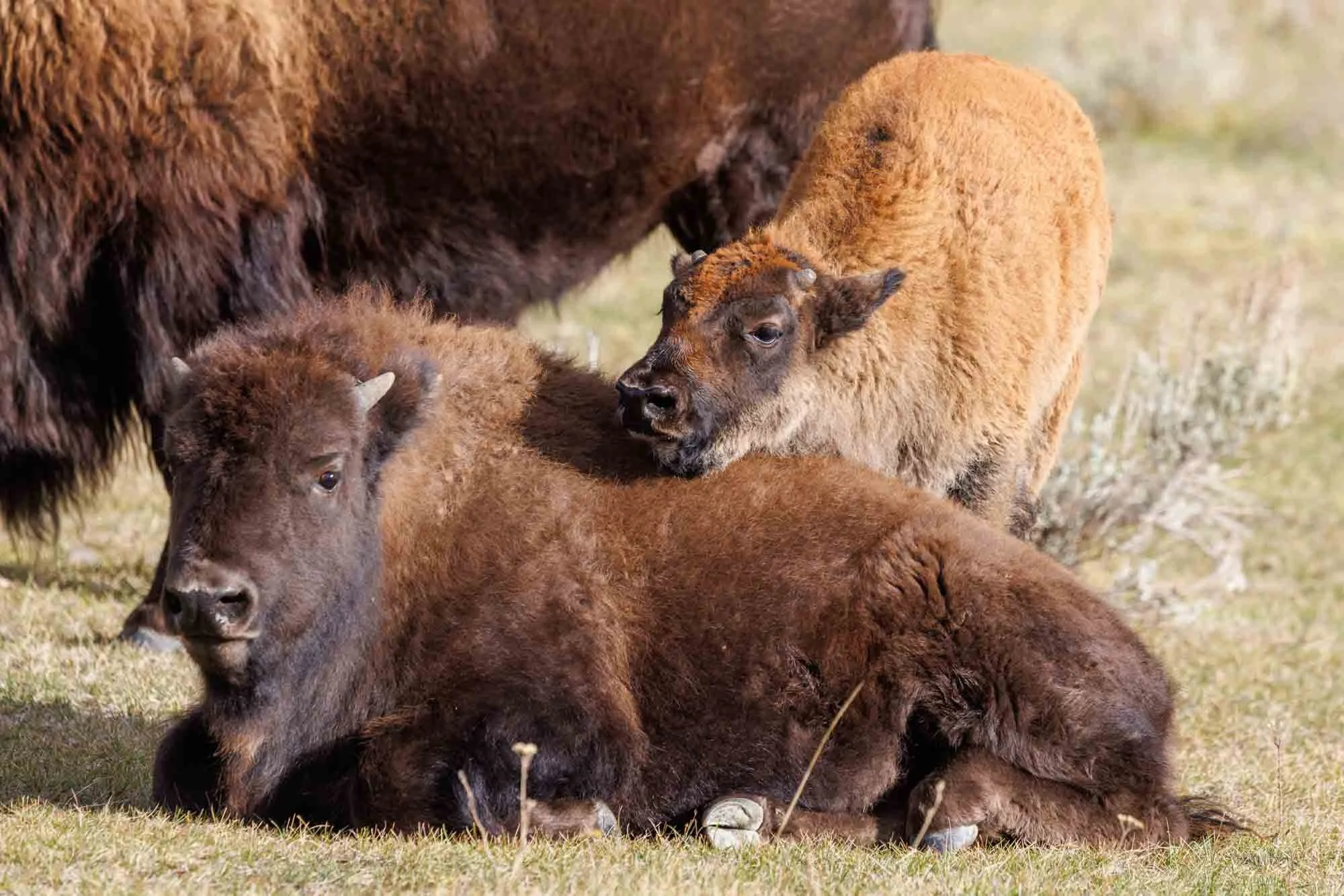
Two bison younglings with mom in the background
The golden light of a warm October afternoon is already a gift for wildlife photography, but nature had an even rarer story waiting for my lens. Through my 600mm f/4 lens, I caught sight of a bison trio that immediately made me pause: a mature female flanked by two young bison.
What made the scene striking was the presence of a "red dog"—the bright, cinnamon-colored coat characteristic of a newborn bison calf.
In the bison world, timing is everything. Roughly 80% of calves are born in a synchronized window around early May, giving them the entire summer to grow strong before the harsh winter sets in. By October, almost all young bison have transitioned into their deep chocolate-brown adult coats. Seeing a vibrant red dog this late in autumn is a beautiful anomaly.
When a female doesn't breed during the peak summer rut, she may cycle again later in the season. The result is a rare autumn birth—a little red dog entering a rapidly cooling world.
But it was the behavior between these three that truly compelled me to dial in my settings. Both the yearling and the tiny newborn seemed deeply attached to the adult female. A quick dive into bison ecology revealed a couple of fascinating possibilities for what was unfolding in front of me:
An Extended Family Affair: Bison cows typically have one baby a year. If this female had a delayed breeding cycle, her calf from last spring (now a yearling) likely never left her side. Instead of being pushed away, the older sibling remained part of the unit, creating a rare bridge between two different generations of calves.
The "Nursery" Safety Net: Bison are intensely social and protective. Females frequently practice "allomothering," acting as guardians for calves that aren't theirs. This newborn may have simply sought out the protection of a trusted, dominant female and her yearling, finding safety in their shadow.
As I watched, the interaction turned incredibly tender. The little red dog, seeking comfort or perhaps just experimenting with herd dynamics, leaned in and rested his head directly on the older yearling. A moment later, he went a step further, draped a front leg completely over the older youth in a gentle, heavy embrace.
To isolate this sweet, unusual behavior, I used the massive compression of the 600mm lens to frame a tight, intimate shot. By filling the background entirely with the textured, dark fur of the mother’s side, the two young bison became the sole focus of the frame—a perfect study of warmth, instinct, and connection just as the seasons prepare to shift.