
 Image 1 of 1
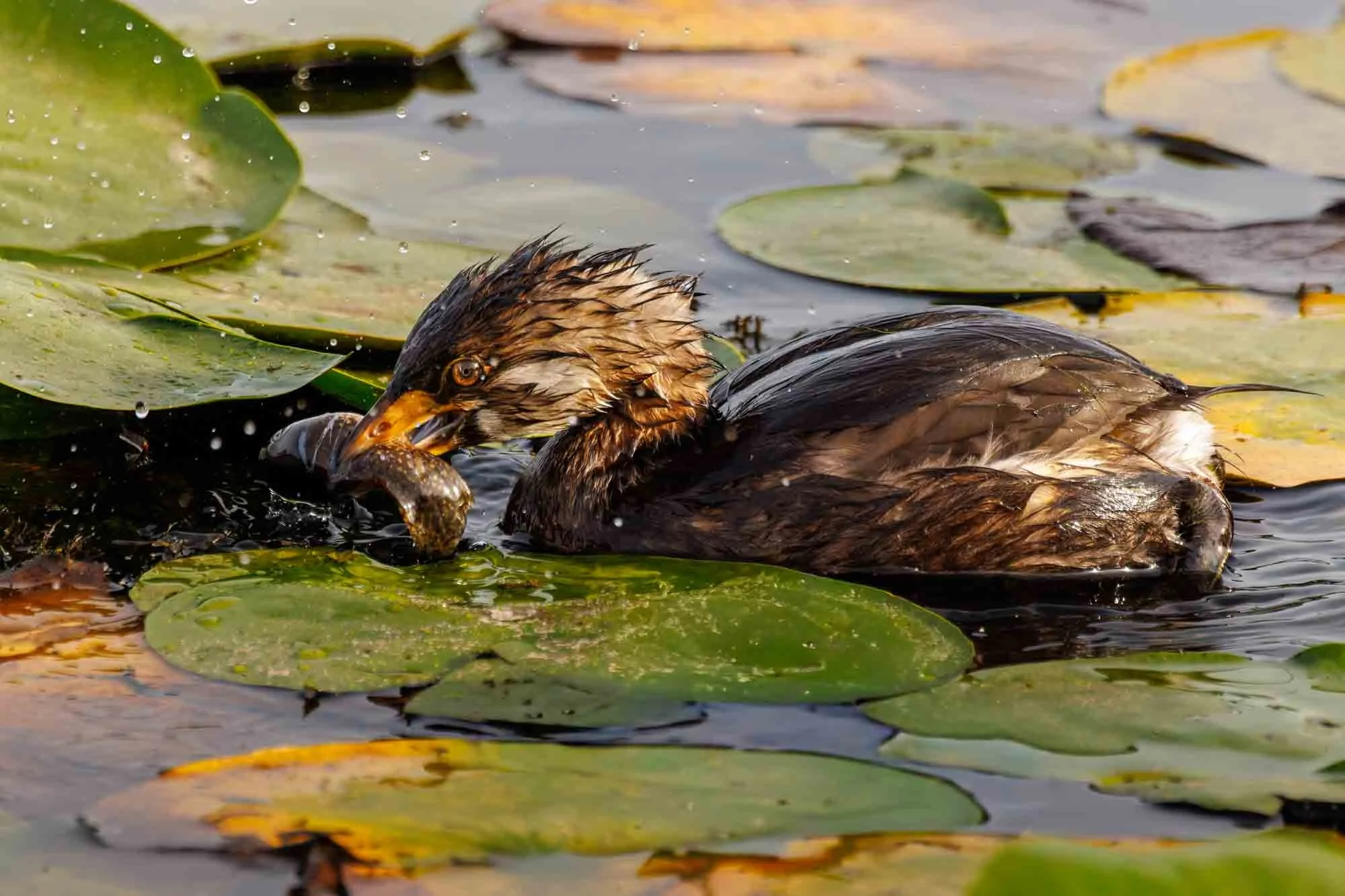
Pied-billed Grebe shaking a small fish at Juanita Bay Park. The vigorous head-shake is part of how these birds crush and position prey before swallowing it whole.
On this afternoon at Juanita Bay Park a Pied-billed Grebe was hunting near where I stood. I got down low and waited for it to catch something. There were plenty of false alarms—the bird either stayed too far away or came up empty. This went on for about an hour as the light dropped.
Pied-billed Grebes are opportunistic divers. They take fish, crayfish, aquatic insects, and other small prey, bringing larger items to the surface. Once a fish is caught, the grebe uses its thick, powerful bill to pinch and crush it, damaging internal organs and softening the body so it can be swallowed whole, head-first. The vigorous head-shake is part of that handling sequence. It stuns or kills the fish through repeated impact, repositions the prey so the head points the right way for swallowing, helps strip away or break spines and fins, and shakes off excess water and slime. The motion is fast and forceful—often violent enough to dismember softer prey like frogs. In this frame the spray is the visible result of that shake while the grebe is still actively processing the fish, not just holding it.
When the grebe finally came extremely close and surfaced with a small fish in its bill, I was in the right spot. The light hit the eye and brought out the colors in the wet plumage and the surrounding lily pads. The frozen spray from the head-shake completed the frame. Everything lined up for that one second.
The fish is a small, soft-bodied prey item typical of what Pied-billed Grebes take in this kind of wetland—likely a juvenile sunfish or similar small fish common in Juanita Bay’s shallows. The grebe’s handling method is the same whether the prey is a fish or a crayfish: crush, position, and swallow.