
 Image 1 of 1
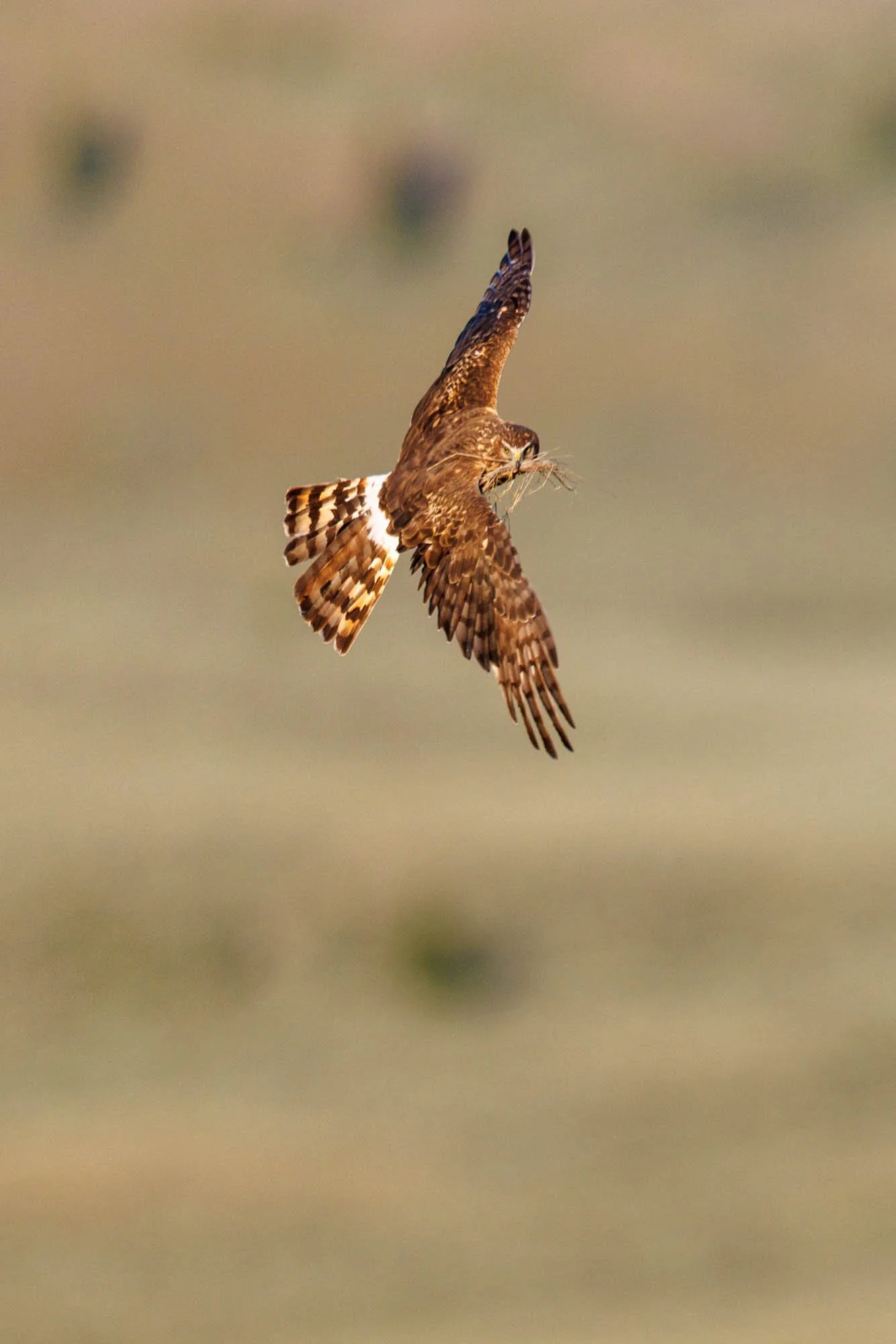
I was driving through southern Montana when someone in the car spotted a Northern Harrier flying nearby. We stopped and watched the bird wheeling over the open grassland and realized it was carrying nest-building material. I caught this short series of shots on one of those trips.
Northern Harriers nest on the ground in open country—tall grasslands, wet meadows, or marsh edges. The nest is usually placed in a dense clump of vegetation that offers some cover. Both the male and the female carry material, though the female typically does most of the arranging. The base is often made from thicker stalks (cattails, willow, or similar woody plants when available), then lined with finer grasses and sedges. Nest building can take one to two weeks, so birds are frequently seen making repeated trips with mouthfuls of dry vegetation.
In the frames I kept, the harrier is clearly loaded with a bundle of fine grass stems. The first shot shows a clean side view with the material trailing behind the beak and the wings fully open. The middle frame catches a more head-on approach as the bird banks, and the last one gives a strong top-down look with the barred underwings and the load of stems still visible against the green background. Together they show the steady, low flight that is typical of a harrier moving material across open country.
It was a brief stop, but the light was good and the bird stayed in range long enough for the sequence. Watching a harrier carry nesting material is a quiet reminder of how much of their breeding season is spent in repeated, deliberate flights between the hunting ground and the nest site.