
 Image 1 of 1
Moose Calf Dance Metallic Print
This was the first of three visits to the pond. You can learn about all of the visits in a previous blog entry here. There was no difficulty with traffic. The people who were there stayed back and gave the animals their space, so the moose and calf could move without being crowded or pushed.
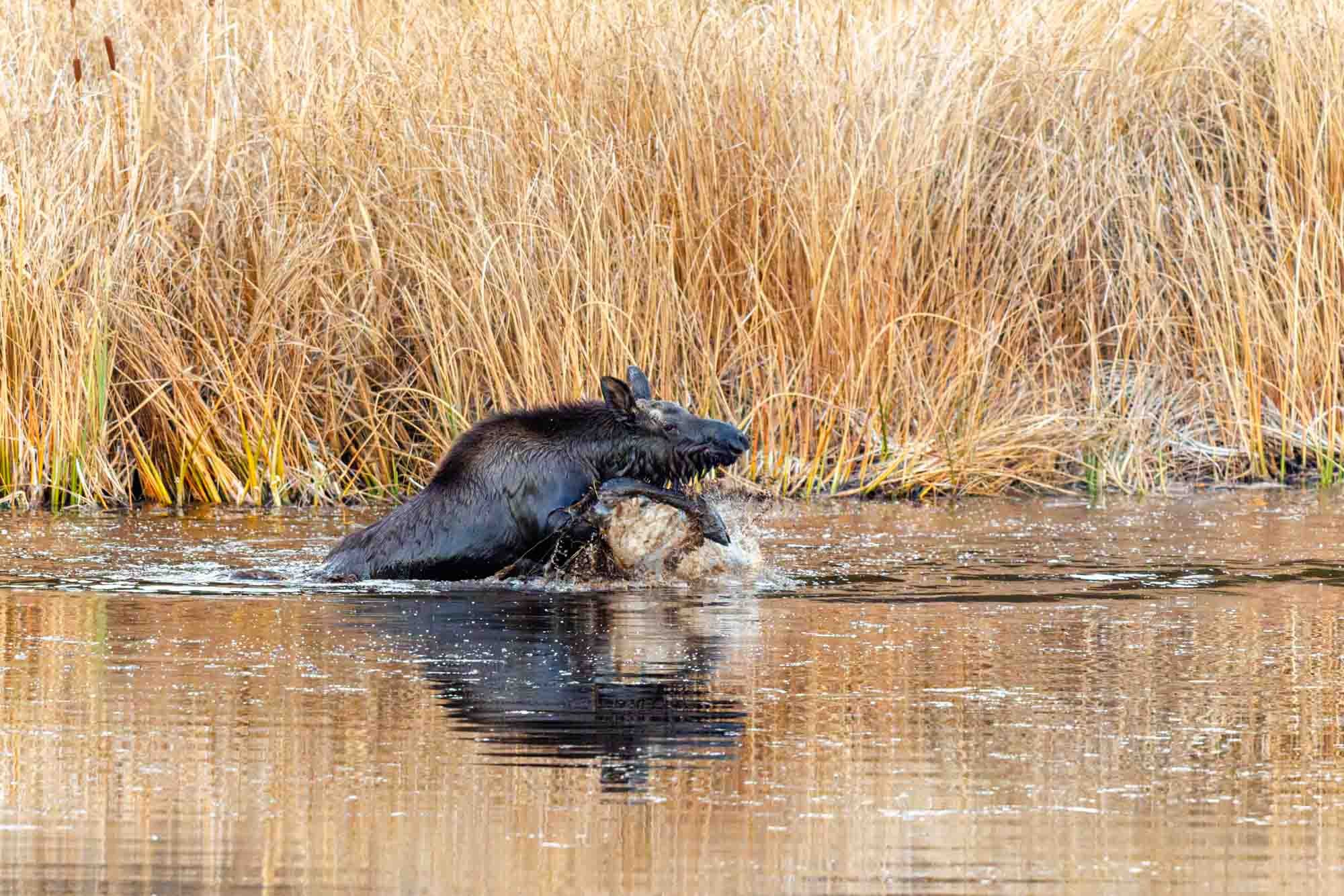
The calf stayed close at first, then began testing the distance. It stepped out from its mother, feet moving in and out of the shallows, each pass a little farther than the last. The splashes grew. What started as small disturbances became heavier kicks that threw water higher, until the calf half-rose out of the surface a few times, body angled upward before it settled back down.
On this day the water took on the color of the surrounding grass. The golden grass reflected across the surface and filled the shallows, so the calf’s movements stirred color as much as water. The light was perfect for reflecting the mooses as well.
Young moose calves do this often in shallow water. At a few months old they are still building the coordination and confidence to move independently, and the presence of the mother lowers the perceived risk. The calf will drift outward in short arcs—far enough to feel the stretch, then back toward her. The larger splashes and the partial rises are typical of that stage: the calf is practicing the heavier, more powerful kicks it will need later, testing how its body feels when it pushes harder against the water. It is also simply burning energy. Calves at this age are impulsive; they follow movement and novelty, and the shifting reflections and the resistance of the water give them something immediate to react to.
Moose calves are born with functional legs and can stand and walk within hours, but full motor control develops over the first several months. In the first days and weeks they are unsteady—their legs are long relative to their body, coordination is limited, and they tire quickly. Most movement stays close to the mother. By one to three months, balance and strength improve rapidly. This is the period that matches the behavior in the water. The calf begins making short, independent movements away from the mother, then returning. In the shallows the kicks become more powerful and deliberate. What looks like play is largely practice: the calf is refining the timing and force of its leg movements, learning how its body responds to resistance, and building the endurance needed for longer travel.
The mother usually remains the fixed point. She may shift position or watch more closely as the distance increases, but she often lets the calf make those short excursions rather than calling it in at the first step away. The pattern is ordinary: the calf’s curiosity and physical drive carry it a little beyond the last comfortable range, the mother stays available, and the calf returns. Over repeated sessions the distance it is willing to cover grows. By four to six months the gait is more stable, the calf can sustain longer swims or runs, and the distance it maintains from the mother increases. The early, energetic testing in shallow water is one of the ways that progression happens—small, repeated challenges that gradually expand what the body can reliably do.