
 Image 1 of 1
I spent a week exploring the snow-covered areas of Yellowstone National Park on a wildlife photography workshop led by Moose Peterson. I had never been to Yellowstone in winter, and I was struck by the beauty of the park blanketed in snow and by the animals we found. Moose knows the park well and was able to show us many beautiful locations and opportunities for mammal photography. The landscapes looked stunning under the snow, and the animals were more accessible, drawn closer to the roads by the cold weather.
Winter in Yellowstone brings several challenges, including deep snow, bitter cold, and other vehicles. Snow covered the roads and presented hazards if you traveled too fast or incautiously. We traveled in a two-wheel-drive van and were fine the entire time, though a four-wheel-drive vehicle can be helpful. Every time we stopped, deep snow lined the sides of the roads. Several times my feet sank deeply when I stepped off the road. Many of the pull-offs were covered, and we had to be careful not to get stuck. We were lucky to have Moose’s knowledge of the park to keep us clear.
Temperatures and wind kept us around 0 to 10 degrees Fahrenheit. I was glad for the cold-weather gear I had invested in: a North Face down jacket, Duluth fleece-lined pants, insulated boots with doubled SmartWool socks, and multiple layers. It kept me warm enough to photograph for several hours standing in the cold without being uncomfortable.
Other vehicles were everywhere despite the remoteness of the park. Some drivers were unfamiliar with winter road conditions, so we learned it was best to keep back from the roads to avoid getting hit—not because people were being reckless, but because of the snow and ice.
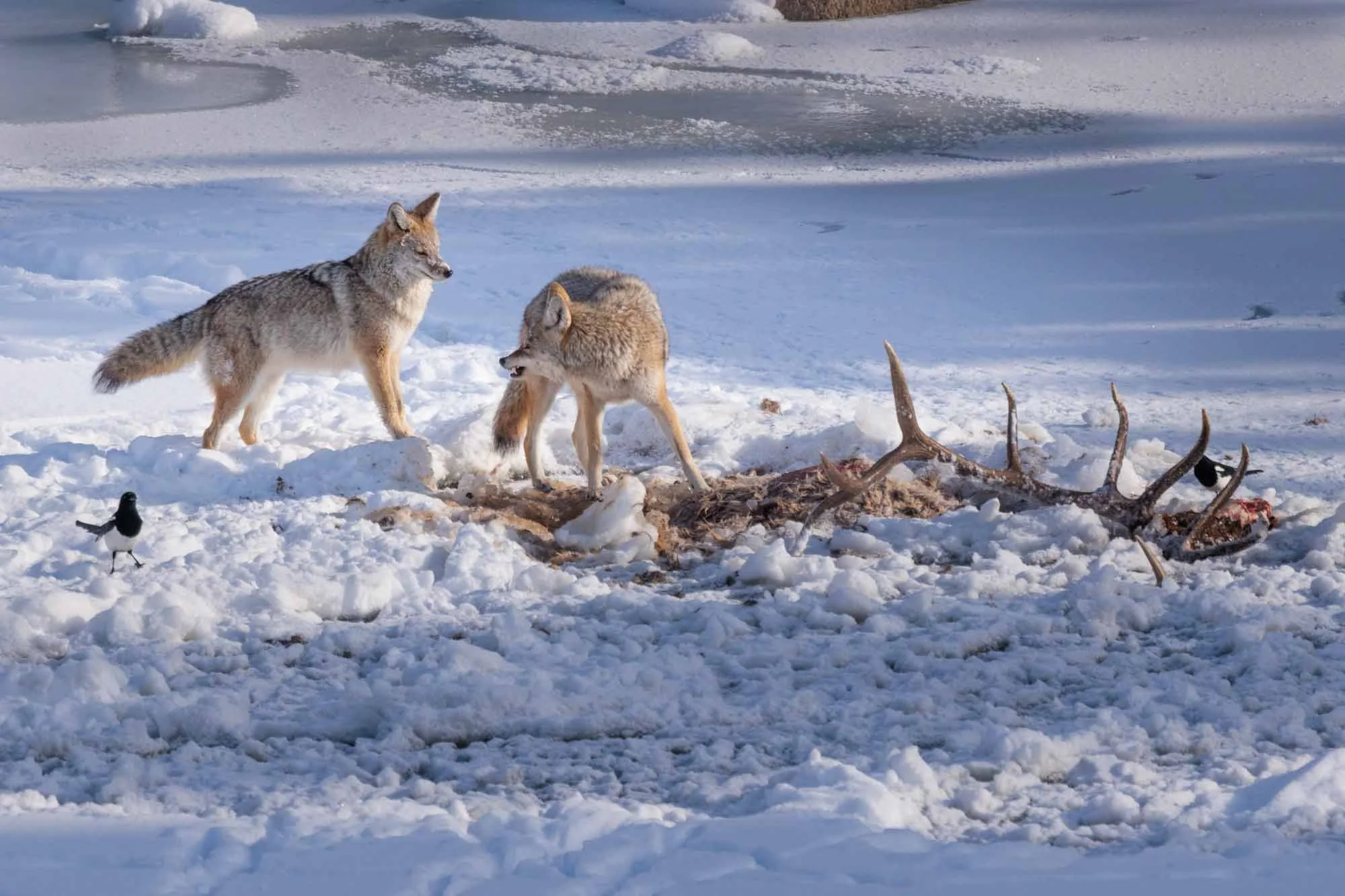
One of the most memorable moments was photographing coyotes feeding on an elk carcass. We first saw the elk frozen in the river earlier in the day and made a note of it. The elk had died in the middle of the river, with only part of it showing above the ice. When we returned, two coyotes were actively feeding, with magpies nearby. We spent several hours photographing the coyotes as they took turns on the carcass in the deep snow. It was a raw, patient wildlife encounter and one of the highlights of the trip—capturing coyotes in their winter habitat in Yellowstone National Park.
Printed in-house on premium pearlescent metallic paper with archival pigment inks.