
 Image 1 of 1
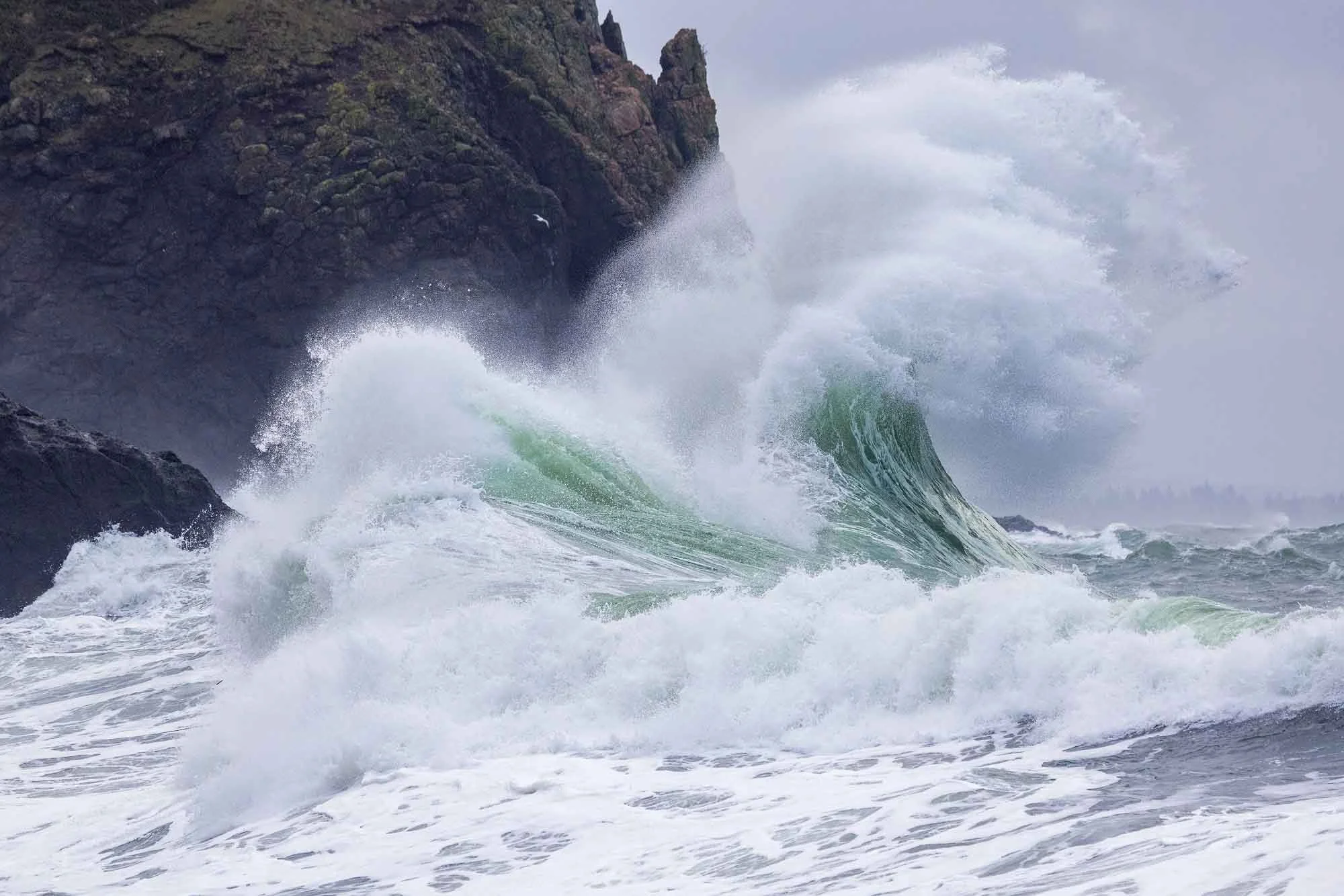
On this January day at Cape Disappointment the Pacific was in full winter mode. Large swells were running and the waves were driving hard into the dark basalt cliffs. I worked the shoreline, watching sets build and waiting for the moments when a wave would rise, curl, and detonate against the rock.
The first frame shows one of those direct collisions. The white water explodes upward against the sheer face while a small bird cuts through the sky for scale. The second frame opens the view: the green face of the wave is still intact as it lifts, then the spray erupts high above the cliff line. Both images were made in the same stretch of conditions—cold, wind-driven, and loud.
Cape Disappointment sits at the northern edge of the Columbia River Bar, the place where the river’s outflow meets open Pacific swell. The bar has long been called the Graveyard of the Pacific because of the number of ships lost there. The cliffs themselves are resistant basalt from ancient underwater lava flows. When winter storms push large, long-period swells onto the coast, those cliffs take the full force. The water can climb the rock face and throw spray high into the air, exactly the conditions visible here. Photographers regularly gather above Waikiki Beach and the lighthouse overlooks on big-swell days for this reason.
The translucent green in the second image is sunlight passing through the unbroken face of the wave before it breaks. Once the wave hits the cliff or the shallower water, that structure collapses into white spray. The two frames together show both stages: the impact against the rock and the larger, still-forming wave just before it breaks.