
 Image 1 of 1
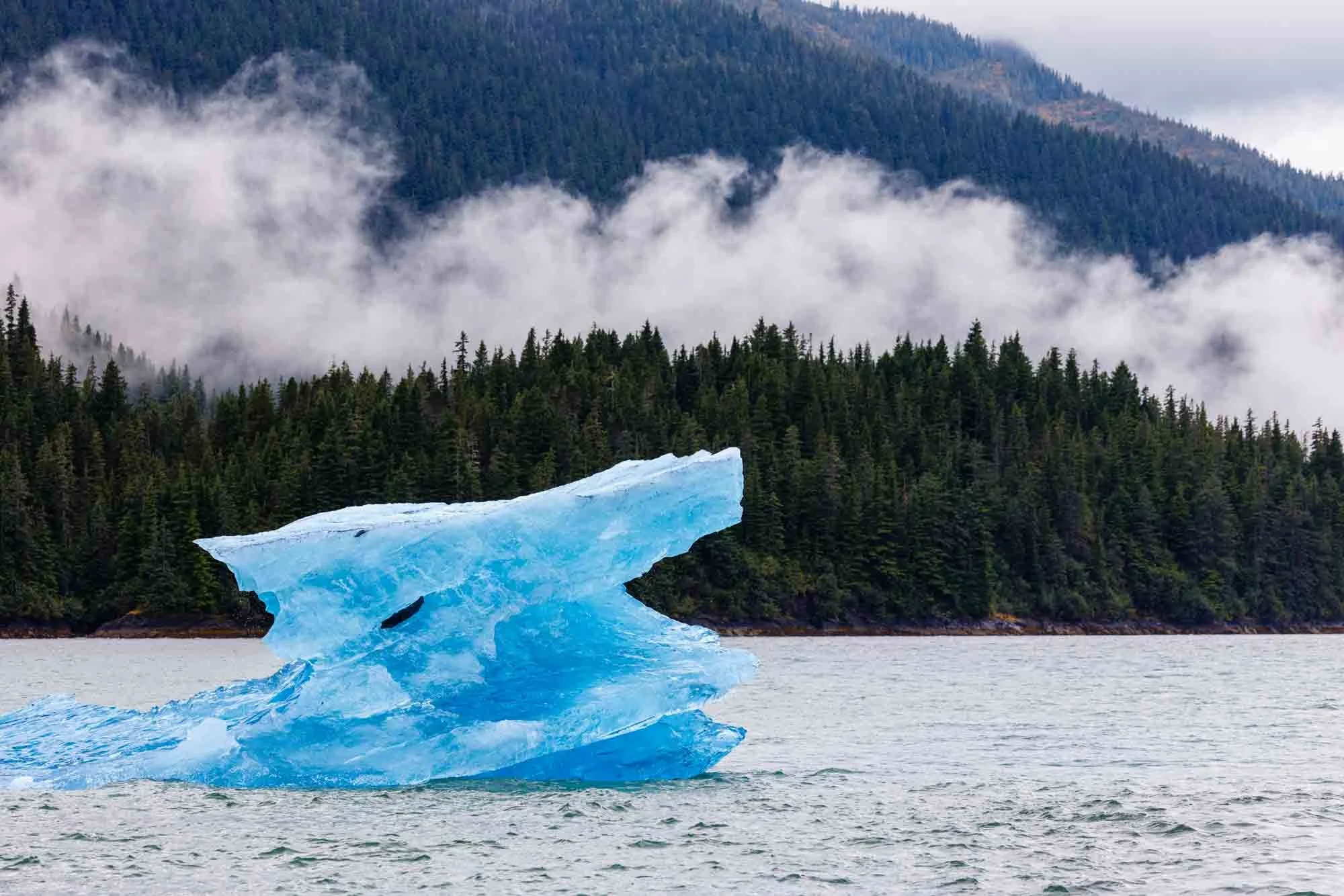
I took this photograph of an iceberg in Endicott Arm, Alaska, near Petersburg, on a trip up the waterway to Dawes Glacier. I was on a boat with eight photographers, which turned out to be an ideal way to experience the landscape. On the way in we passed larger vessels where people sat for hours in open seats exposed to the cold air. Our setup was different. We had dedicated areas on the boat to keep gear in the cold so it wouldn’t fog, and warm spaces to wait until more icebergs appeared.
This piece caught my eye because of the vivid blue against the trees and mist. The blue appears when denser ice from deeper in the glacier is exposed—often when an iceberg rolls. We saw a wide range of sizes, from small fragments to pieces as large as the boat.
Endicott Arm is a roughly 30-mile fjord in the Tracy Arm–Fords Terror Wilderness, part of the Tongass National Forest. Steep granite walls rise on either side, and the waterway ends at Dawes Glacier, a tidewater glacier that calves directly into the fjord. The icebergs drifting through the arm are pieces that have broken from the glacier face. After calving, wind, currents, and wave action continue to shape them. Melting undercuts sections, pieces flip or roll, and the exposed surfaces erode into the irregular forms visible from the water. Harbor seals often haul out on the larger pieces.
Glacial ice starts as snow. Over time the weight of successive layers compresses it, squeezing out air bubbles and forming denser crystals. In this denser ice, light travels farther; longer wavelengths are absorbed and shorter blue wavelengths are scattered or transmitted, producing the intense blue. When an iceberg rolls or fractures, that older, deeper ice becomes visible. Surface melting and cracking can later whiten the exterior again until another turnover or break exposes more blue ice.