
 Image 1 of 1
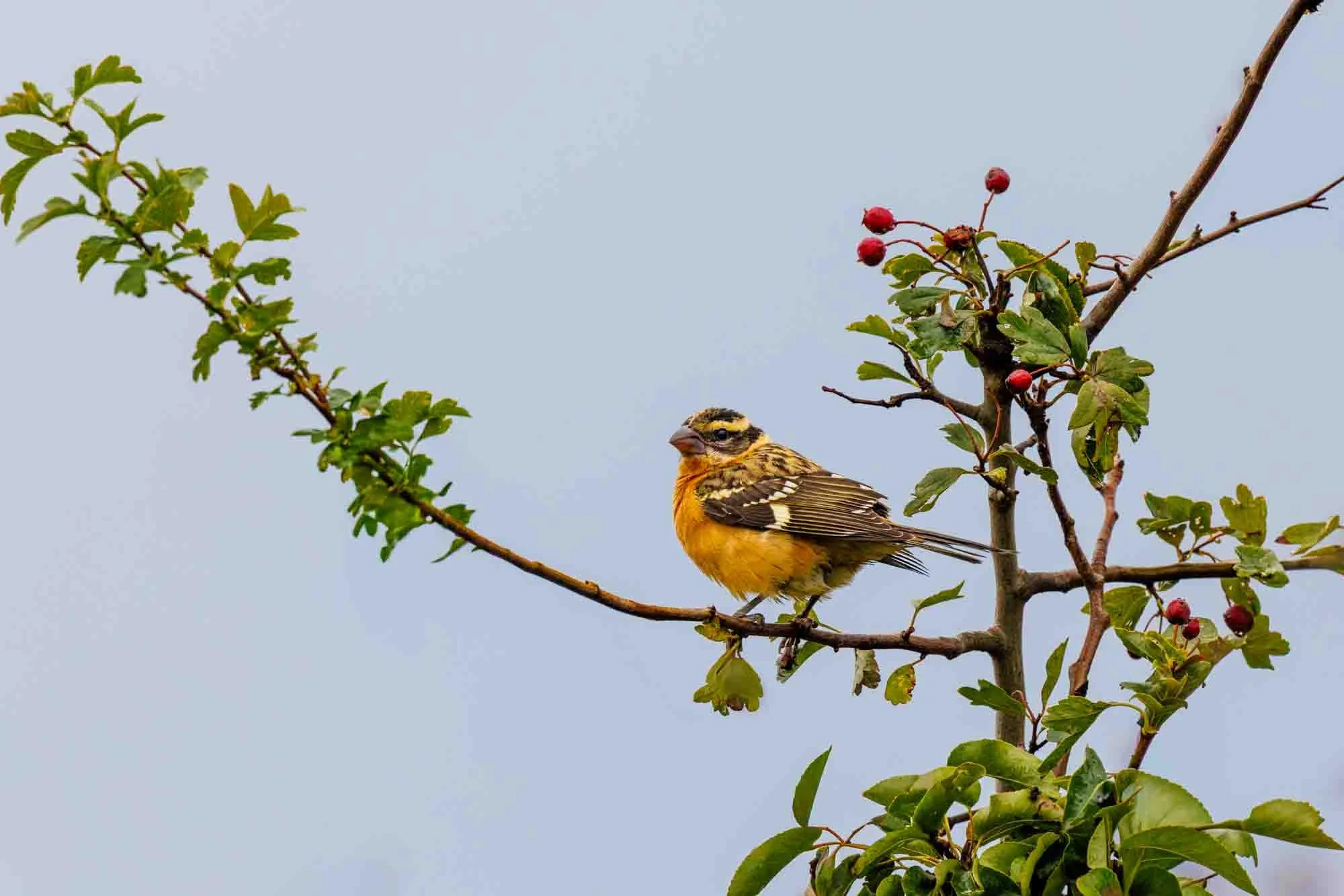
I photographed this Black-headed Grosbeak at Iverson Spit in August. The bird was working the fruit-bearing bushes that line the trail along the water. Iverson Spit Preserve, on the east side of Camano Island overlooking Livingston Bay and Port Susan, is a known birding spot with more than a hundred species recorded. The short trails run along the dike, through forest, and past berry-heavy thickets that attract migrants and residents in late summer.
Black-headed Grosbeaks are western breeders that winter in Mexico. Their heavy bills let them crack seeds and hard-bodied insects, but in late summer and during migration they lean heavily on berries and fruit. After nesting they often move into berry-rich areas, which is exactly what this bird was doing. On the breeding grounds their diet is roughly half insects and half plant matter; once the young are independent, fruit becomes a bigger part of the menu.
We have a couple of pairs—males and females—that use the green space behind our house. They visit the feeders regularly, and this year they were around often enough that we got used to seeing them. Work and timing never lined up for a proper session with the camera. Any move toward the deck sent them off, so we mostly just watched. It was still good to have them around.
On this August day I was walking the trail at Iverson and not finding much. Summer birding there can be hit or miss—sometimes a flurry, sometimes quiet—but the walk is usually worthwhile either way. About halfway down I spotted this familiar bird perched in the open. I was struck by it, but not so much that I missed the frame. It was one of those moments where the bird you know from the yard shows up in a wilder setting, framed by the berries that brought it there.