
 Image 1 of 1
We headed into Yellowstone in the afternoon, about three hours before sunset. The light was still harsh on a bright sunny day, but the early start gave us time to reach the Lamar Valley as the light softened. The timing worked. Around 6 pm we found a herd with very young calves and a good place to pull over.
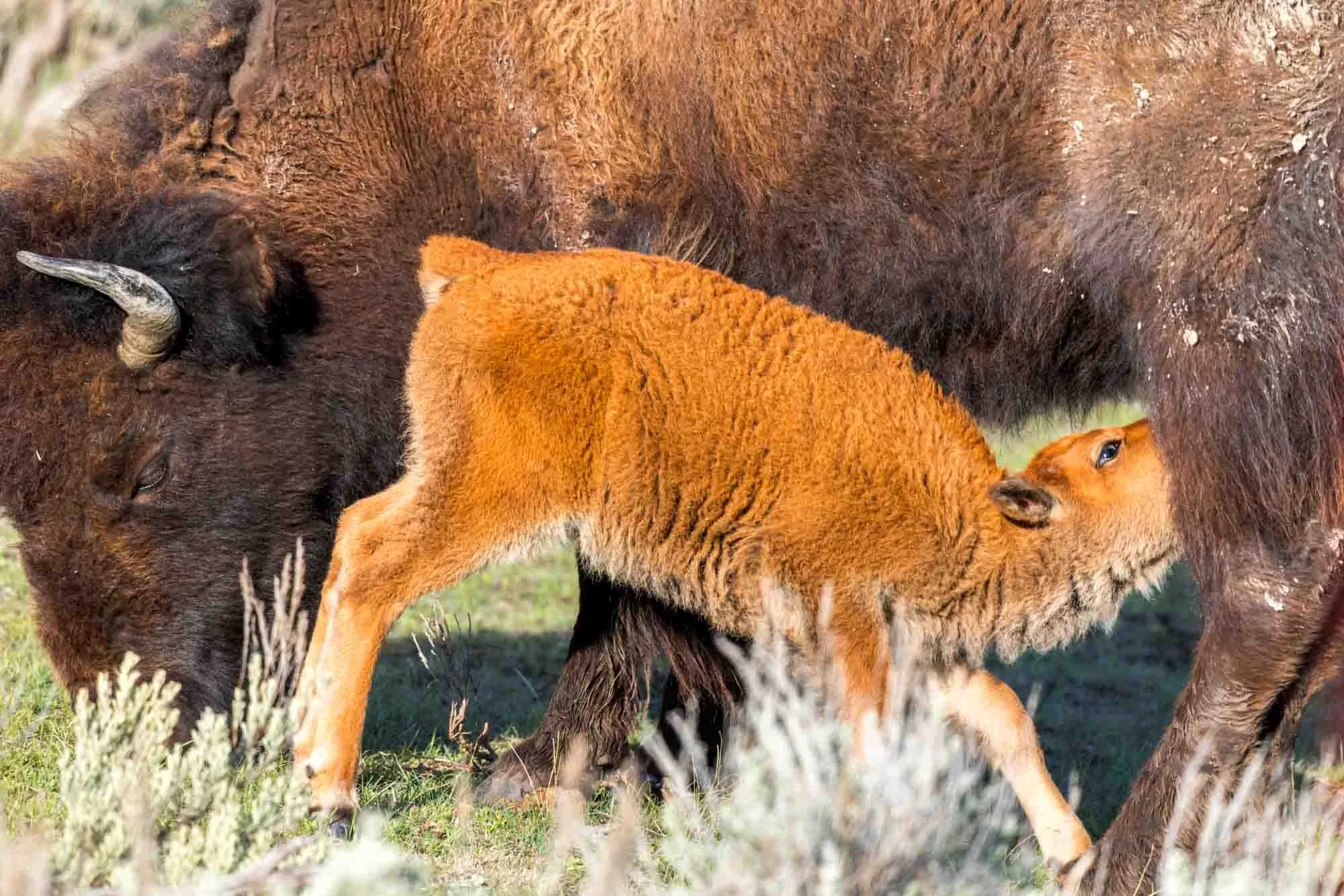
In the frame, a newborn bison calf butts its head upward against its mother to stimulate milk flow while nursing. Bison calves in Yellowstone are typically born in late April and early May. These “red dogs,” named for their reddish-orange coats, are precocial—they can stand and follow the herd within a few hours of birth. The warm side light of early evening catches the calf’s textured fur and the quiet intensity of the moment between mother and young.
This image was made during the heart of Yellowstone’s spring calving season in the Lamar Valley, when new life is concentrated and the light rewards patience. Printed in-house on premium pearlescent metallic paper with archival pigment inks.