
 Image 1 of 1
Sometimes I wonder why the Bald Eagles in Juanita Bay Park spend so much time waiting on their perches. These birds have 60% of their brain capacity dedicated to vision. They see way more than we humans do. So we know that they see available Coot and other animals available. Sometimes it may just be that they have already eaten. I have found that there is another reason which is even simpler, they have preferences.
There is a particular fish that these birds crave and will go out of their way to find. These fish have golden scales which are hard to get into. I have seen eagles and river otters struggle to get into the meat of these fish so they are not easily consumed. The effort required is worth it to them. I discovered this when one of the bald eagles caught one and consumed it with great gusto. Never would have known this without seeing that they sometimes capture these fish.
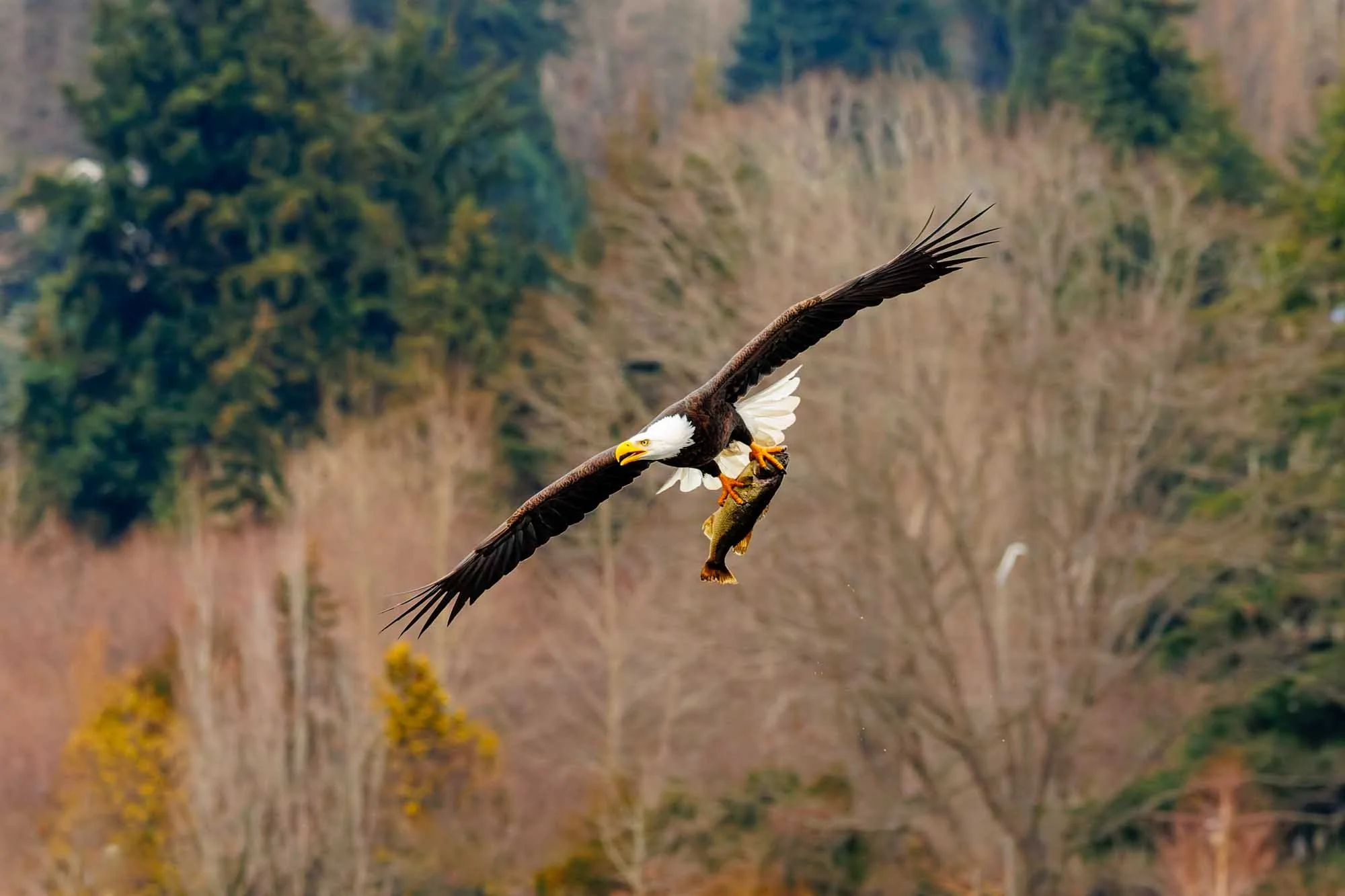
On this day, a bald eagle caught one of these huge fish which almost dwarfs them when you see them together. I really don't know how a bald eagle can carry a fish this size and stay in the air. Awe inspiring when it happens.
The fish is almost certainly a Common Carp. They are common in Lake Washington and the bays around Juanita, grow large, and carry the golden-brassy scales that match what you described. Their tough skin and heavy scales make them difficult for both eagles and river otters to open, yet the birds and otters still target them. Carp are high in fat and energy once the skin is breached, which explains the preference even when easier prey like coots are visible.
Bald Eagles prefer fish when they can get them and will select larger individuals when conditions allow. Most of the time they take prey in the three-to-five-pound range that they can lift cleanly. A fish this size pushes the practical limit. Under good conditions an adult eagle can manage roughly half its body weight in flight, but a large carp often forces a choice: drop the fish or swim it to shore with the wings. In this case the eagle stayed airborne, wings fully open and the fish locked in both feet. The winter trees behind make the scale of the load especially clear.
That preference also explains the long waits. The eagles are not ignoring the coots; they are holding out for the higher-value fish that is harder to catch and harder to process. When one finally appears near the surface or in shallow water, the long watch ends in a single committed flight.