
November 18th, 2026
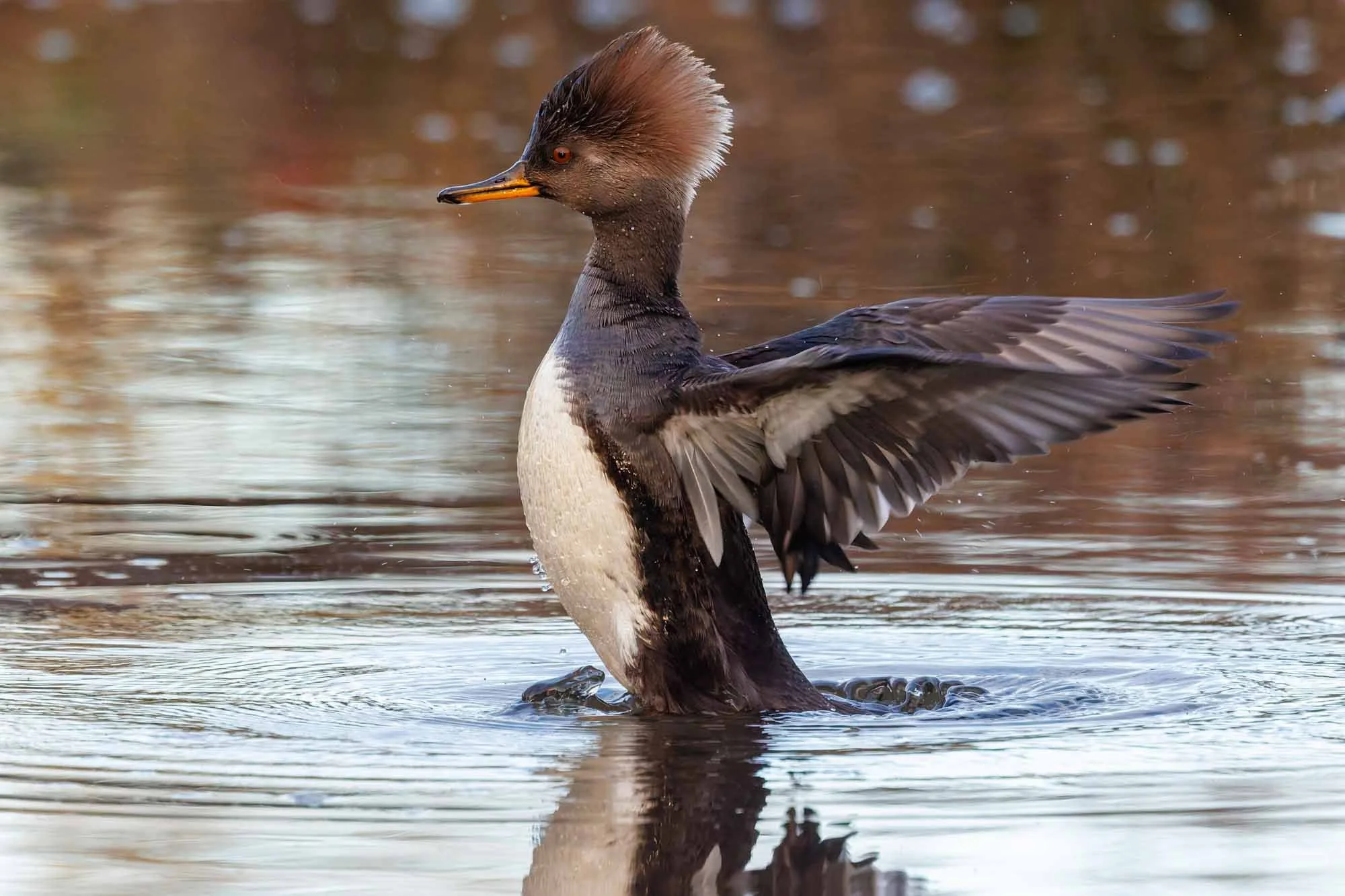
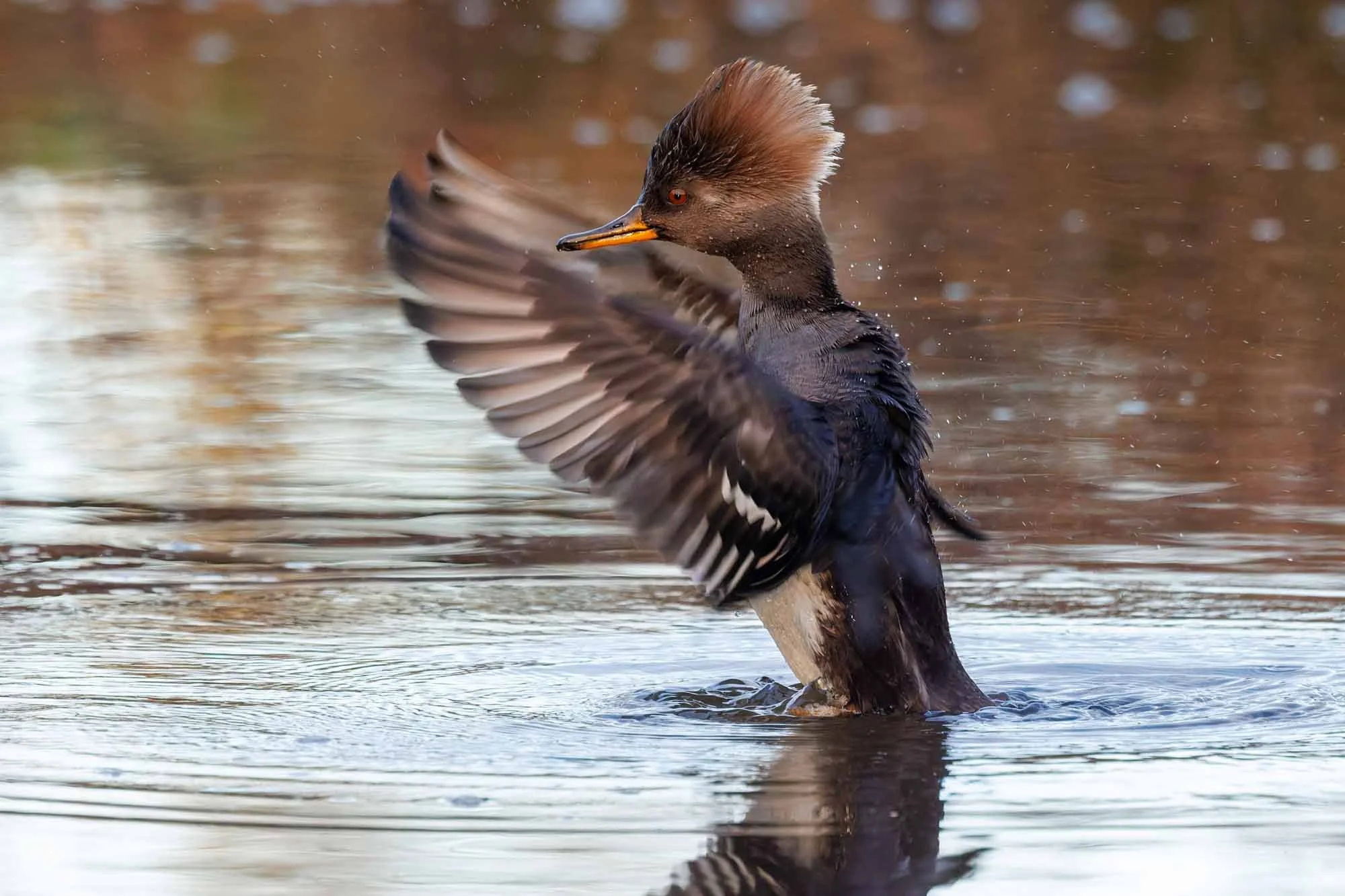
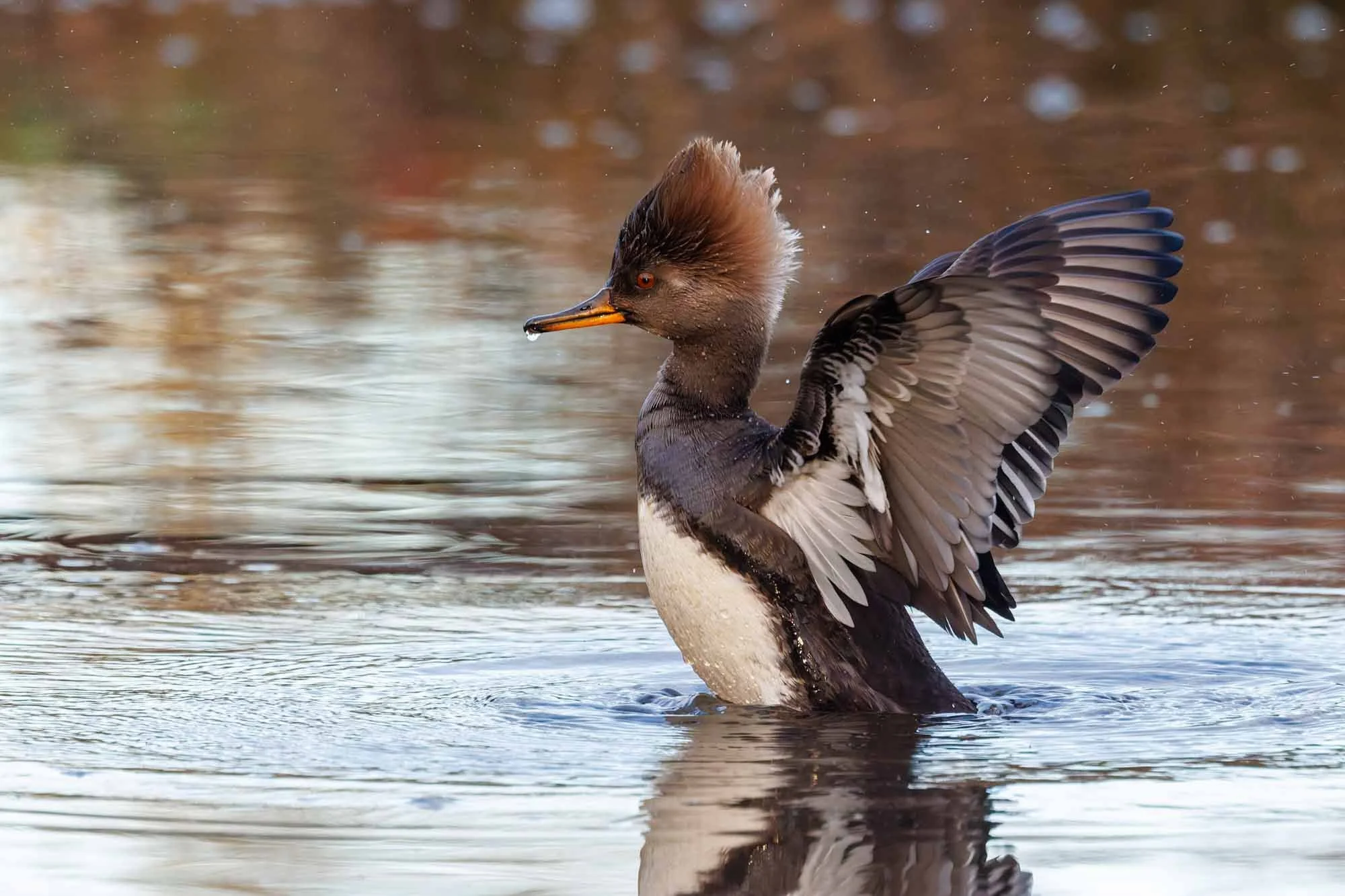
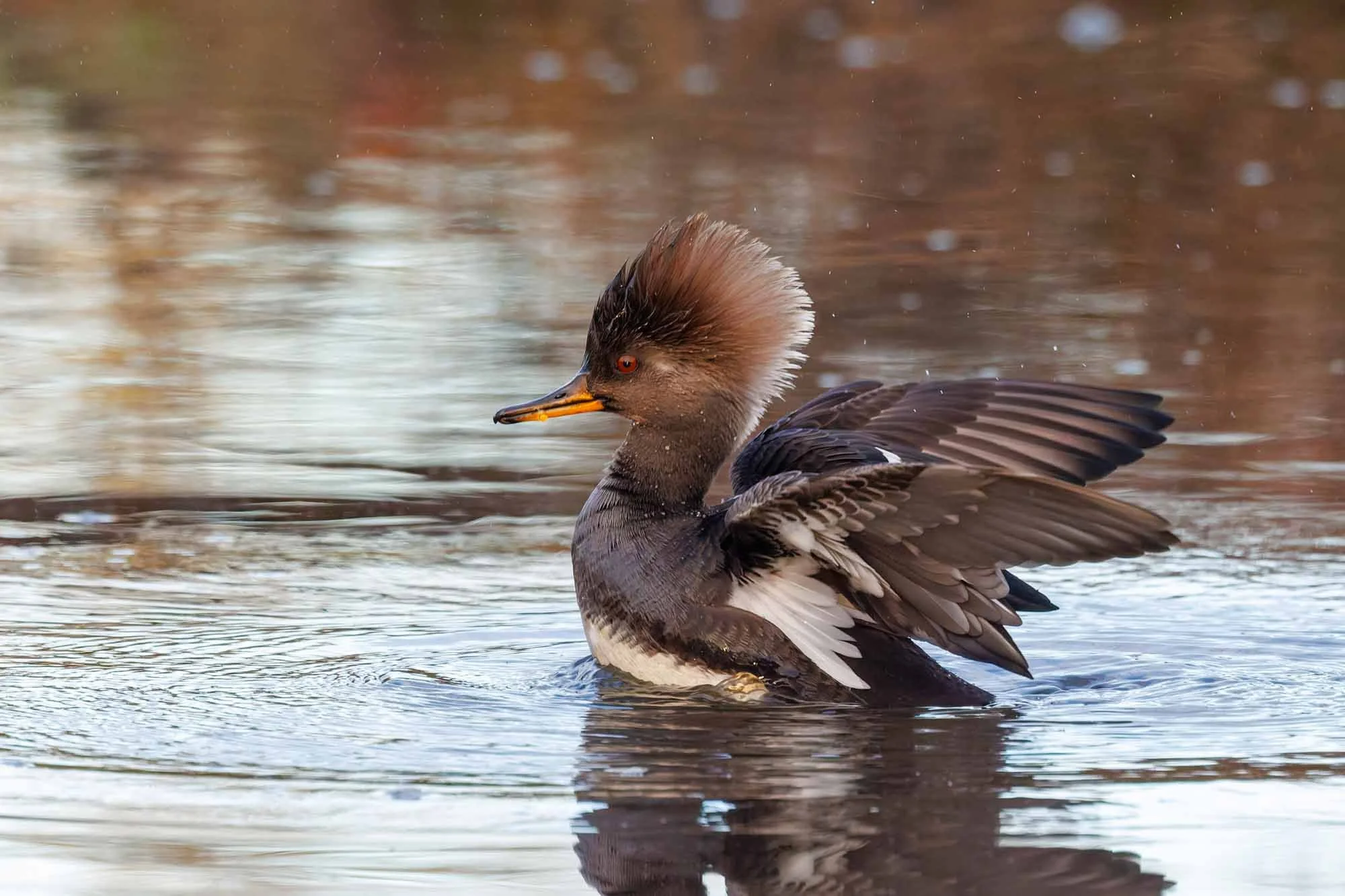
On this morning in February, I arrived at the Billy Frank Jr. Nisqually National Wildlife Refuge just at dawn. My wife and I usually visit the restroom, pay for the parking, and then walk into the park. As usual I set up my gear before going into the bathroom. Just part of the process for me. I was glad I did. The retaining pond in front of the office, store, and bathroom building was hosting a pair of Hooded Mergansers.
I picked a spot on the walkway into the building and started photographing them in the lovely light of early morning. The walkway was VERY cold to sit on. I was sitting on the walkway that is placed over the water that leads into and out of the retaining pond these birds were in. Great for shooting unobstructed. A challenge because the cold air had left it extremely cold and covered with frost.
The birds were in easy range of my 100-500mm lens and seemed unconcerned by my presence. They wandered around the area and kept diving for and finding food. Hooded Mergansers are the smallest of the North American mergansers and the only one found solely on this continent. Both sexes can raise and lower their crests—the female’s is a warm cinnamon-brown, the male’s a dramatic black-and-white fan. In winter they often form seasonal pairs on open water, staying together while they feed and rest before moving north to nest in tree cavities in spring.
The female I focused on repeatedly raised her crest and then flapped her wings in the open water. Wing-flapping in Hooded Mergansers can be both a simple comfort movement (shaking water from the feathers) and part of the broader set of displays that occur around pair maintenance in winter. Males especially use crest-raising, head-throws, and wing-flaps during courtship, but females also stretch and flap as they settle and maintain the pair bond. Watching her lift those wings against the soft morning light, with droplets flying and the crest standing up, made the ordinary moment feel like a small performance.
The land under this refuge has its own layered history. Much of the estuary was once the Brown Dairy Farm; dikes had been built to turn the tidal flats into pasture. In the 1960s a deep-water port was proposed for the same area. A grassroots effort led by the Nisqually Tribe and local residents stopped the project, and in 1974 the U.S. government purchased the farm and created the refuge to protect the delta for migratory birds and fish.
The refuge carries the name of Billy Frank Jr., a Nisqually tribal leader who spent decades defending the treaty fishing rights guaranteed in the 1854 Treaty of Medicine Creek. From the 1940s through the 1970s he was arrested more than fifty times during the “Fish Wars” for fishing in the tribe’s usual and accustomed places. Those protests and the subsequent federal lawsuit led to the 1974 Boldt Decision, which affirmed that the tribes were entitled to half the harvestable salmon and would co-manage the fishery with the state. Frank later chaired the Northwest Indian Fisheries Commission for more than thirty years and continued working on salmon recovery and estuary restoration until his death in 2014. The refuge was renamed in his honor the following year.
Sitting on that cold walkway watching a pair of Hooded Mergansers feed and display felt like a quiet reminder of why places like this exist—open water, winter birds, and the long work of keeping the estuary healthy.
Bringing the Moment to Life
The morning light really brought out the Gosling’s bright yellow feather detail combined with the green seaweed.
In our studio, I produced this photograph using our Canon imagePROGRAF PRO-1100 and archival Lucia PRO II pigment inks. When printed on Red River Polar Gloss Metallic paper, the morning light really captures the detail in the birds feathers and especially the crest. The metallic paper beautifully handles those subtle midtones and colors, making the scene pop off the paper without losing any fine detail in the feathers.
Printed with an elegant white border for safe handling and a classic gallery presentation, this piece is flat-shipped in extra-rigid packaging to protect its premium reflective finish.
Bring the story home: Shop Female Hooded Merganser picture in wildlife Collection
Print Details: Available in 8.5" x 11" Paper (7" x 9" Image) and 11" x 17" Paper (10" x 15" Image).