
November 14th, 2026
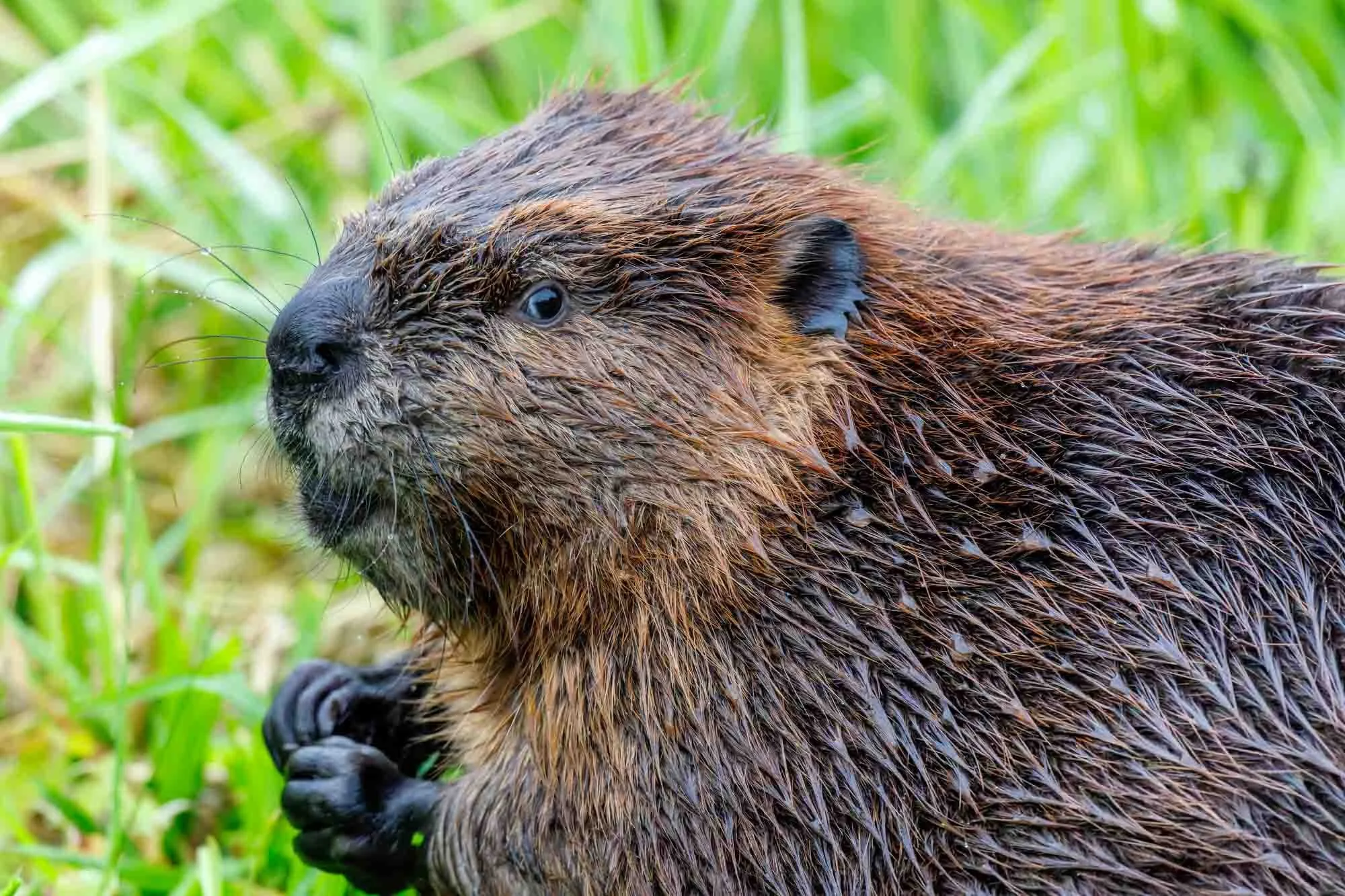
Beaver giving me a look in Juanita Bay Park
Sometimes subjects show up where you don’t expect them. In this case it was a beaver near the sidewalk at Juanita Bay Park.
I like visiting Juanita Bay for the variety it offers. Wood Ducks stand out in bright sun as they move across the water. Great Blue Herons hunt along the edges. Pied-billed Grebes dive and often come up with fish. Then there are the beavers. They’re here, but seldom fully visible. You see their work everywhere—chewed trees, cut reeds, and the occasional stick being carried through the water for food or building. There’s a lodge near the boardwalk, though I’ve never seen them right at it.
Beavers are mostly active from dusk into the night. They spend the warmer months eating aquatic plants, grasses, and the leaves and inner bark of deciduous trees, while also cutting and hauling wood. Much of that wood is used for dams and lodges, but some is stored underwater near the lodge as a winter food cache. Dams raise the water level so the lodge entrance stays submerged and the pond doesn’t freeze solid. The whole family works on maintenance—adults do most of the heavy construction, while younger animals contribute what they can. When alarmed, a beaver will slap its flat tail on the water, a sharp warning that sends the others diving or heading for the lodge.
They live in family colonies, usually a breeding pair plus their kits and the previous year’s young. The kits and yearlings wrestle and play-fight in the water and along muddy edges. It’s both social bonding and practice for the coordination they’ll need later. Adults are more task-oriented, but the younger ones treat the shallows like a playground. On this day I found a few doing exactly that—wrestling and tumbling in the mud between the reeds.
They were well within range, so I followed for a bit. One turned and looked straight at me. It was close enough that the frame became a tight portrait—wet fur, whiskers, and that direct stare—right beside a path most people walk without expecting a beaver at eye level.
Juanita Bay’s wetlands and shoreline give them the shallow water, vegetation, and woody material they need, which is why their sign is common even when the animals themselves stay hidden. This was one of the clearer looks I’ve had.